
Poultry manurefield guide

Practical guide · Canary Islands

Fresh poultry manure on the farm

How to receive it, cover it, spread it and work it in so it feeds the soil, without smells and without flies.

  • Potatoes, legumes and cereals
  • 5-minute read

An idea by Matías Cruz González, a partner at Granja La Cuesta

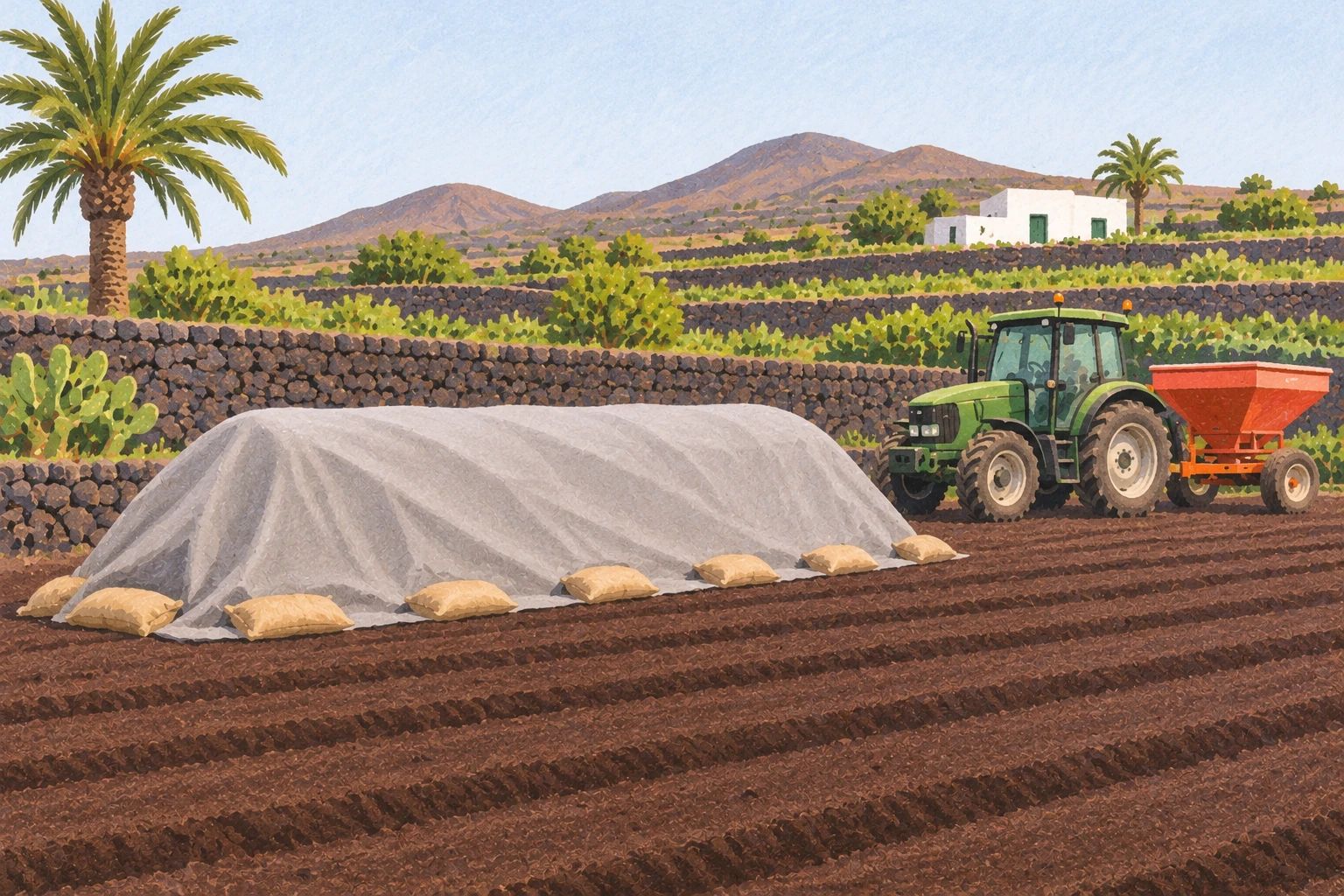
Illustration: a farm in the Canary Islands with prepared soil, a heap of poultry manure covered with a geotextile sheet and a tractor with a spreader ready to spread it.

Step by step

From the lorry to sowing, in six steps: the summary here, the details below.

Illustration: a farmer checks the manure analysis and the weather before ordering.

Step 1 / 6

Plan before you order

Manure that arrives without a plan ends up in a heap. And a heap means smell and flies.

  • Ask the supplier for the analysis: nitrogen, phosphorus, potassium and moisture.
  • Work out the rate for your crop and your soil (see the rates table).
  • Pick the day: little wind and none blowing towards houses, no heavy rain forecast, and the soil not waterlogged.
  • Order only what you can spread and work in within a day or two, with the tractor, spreader or crew ready.
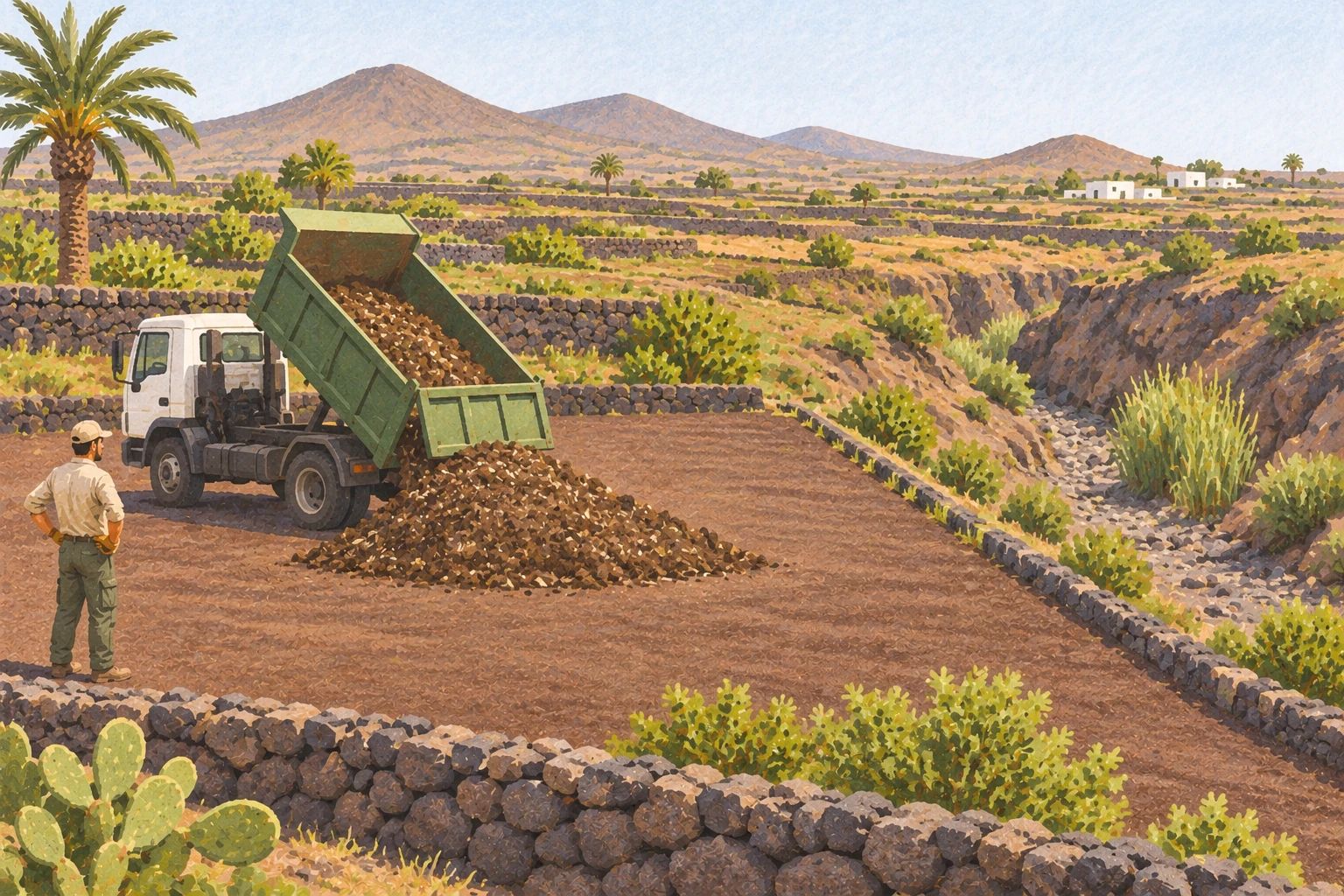
Illustration: a lorry tips the manure inside the field, on firm ground, with the ravine beyond the wall and the houses far off.

Step 2 / 6

Unload in the right place

Where you tip it decides how much of a nuisance it is.

  • Inside the field where it will be used, on firm, high, level ground.
  • Away from water (ravines, irrigation channels, wells, water galleries and springs) and away from houses.
  • Never in a ravine bed or wherever water runs when it rains.
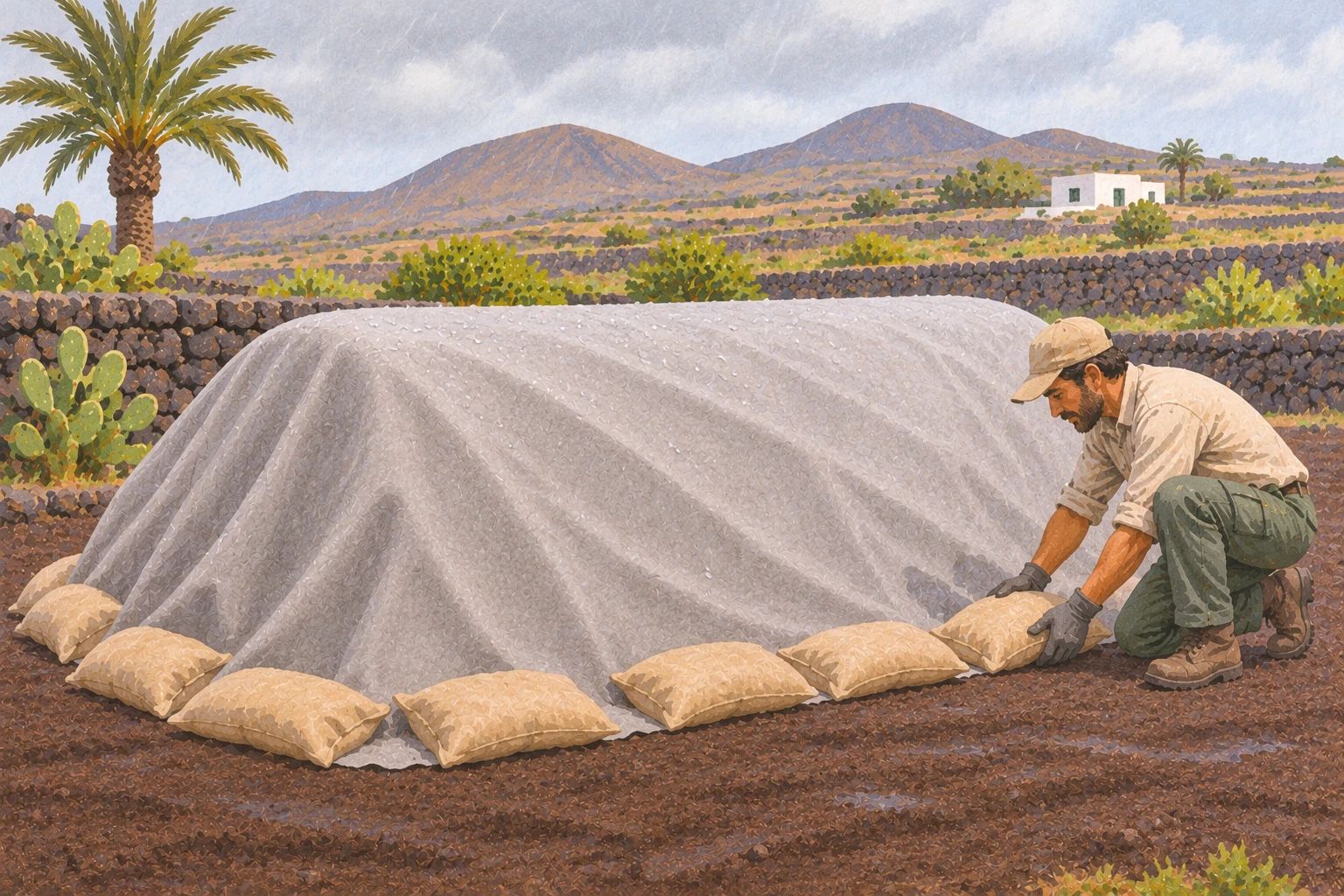
Illustration: in light rain, a farmer weighs down with sandbags the geotextile sheet covering a ridge-shaped heap of manure.

Step 3 / 6

If it has to wait, cover it with geotextile

A well-covered heap hardly smells, stays dry, and flies cannot lay eggs in it.

  • A compact, tall heap, ridge-shaped, so rain runs off.
  • Cover it completely with a geotextile sheet that breathes: non-woven fleece of about 150–300 g/m².
  • Down to the ground all round, weighed down with sandbags or stones: no gaps for flies.
  • No more than 10 days in the field, and a single heap per field.

Do not add lime: it sends ammonia up, smells worse and wastes nitrogen.

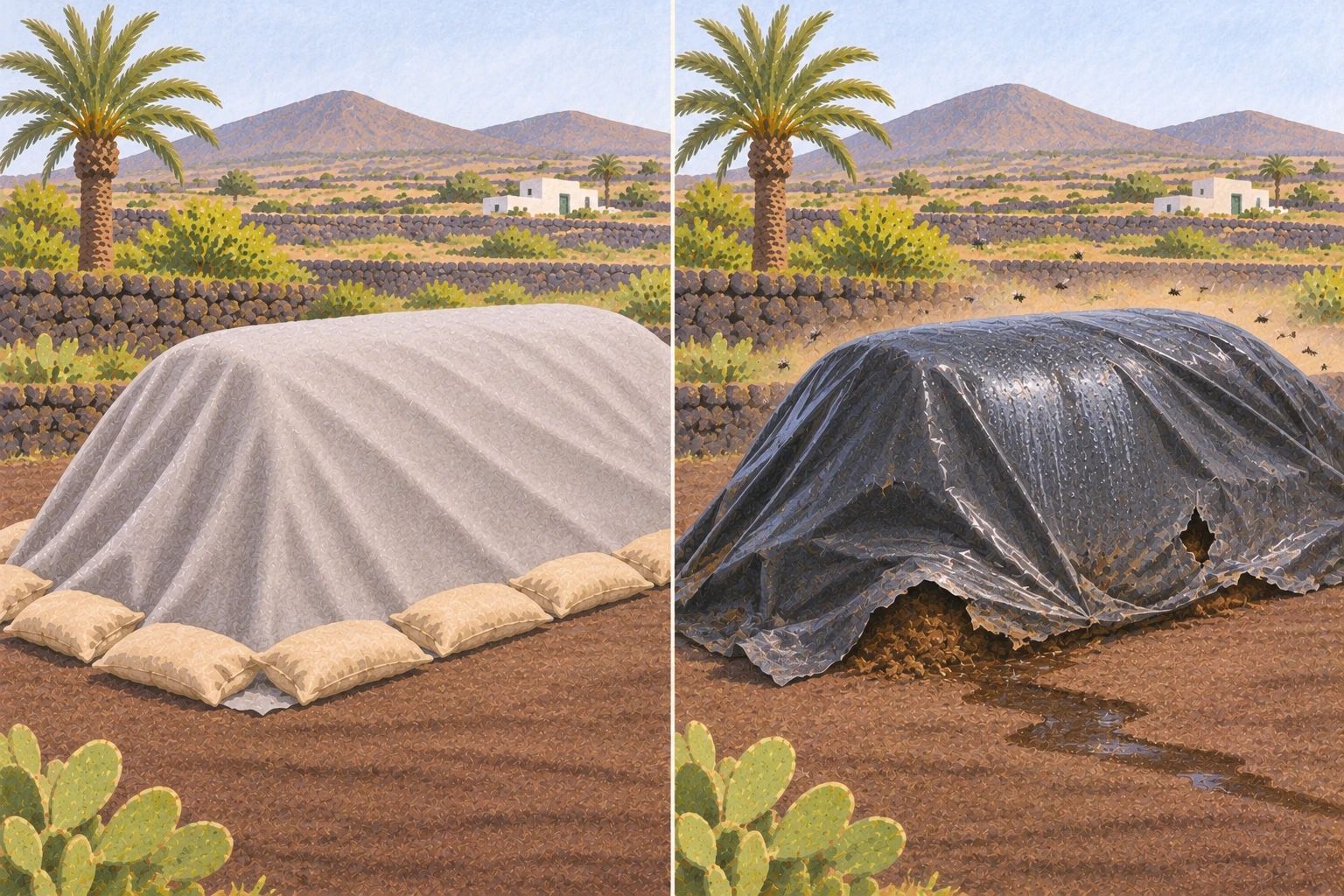
Why geotextile and not plastic?

Illustration: on the left, a heap under geotextile, dry and fly-free; on the right, one under black plastic, torn, leaking at the bottom and surrounded by flies.

Geotextile sheet

  • It breathes: steam escapes and the heap does not rot.
  • It keeps rain out: no runoff across the ground.
  • It stops flies: they cannot get in to lay their eggs.
  • It lasts: reusable many times.

Plastic

  • It sweats: the water stays inside.
  • It ferments without air and smells worse.
  • When you lift it, all the smell comes out at once.
  • It tears and the wind carries it off.
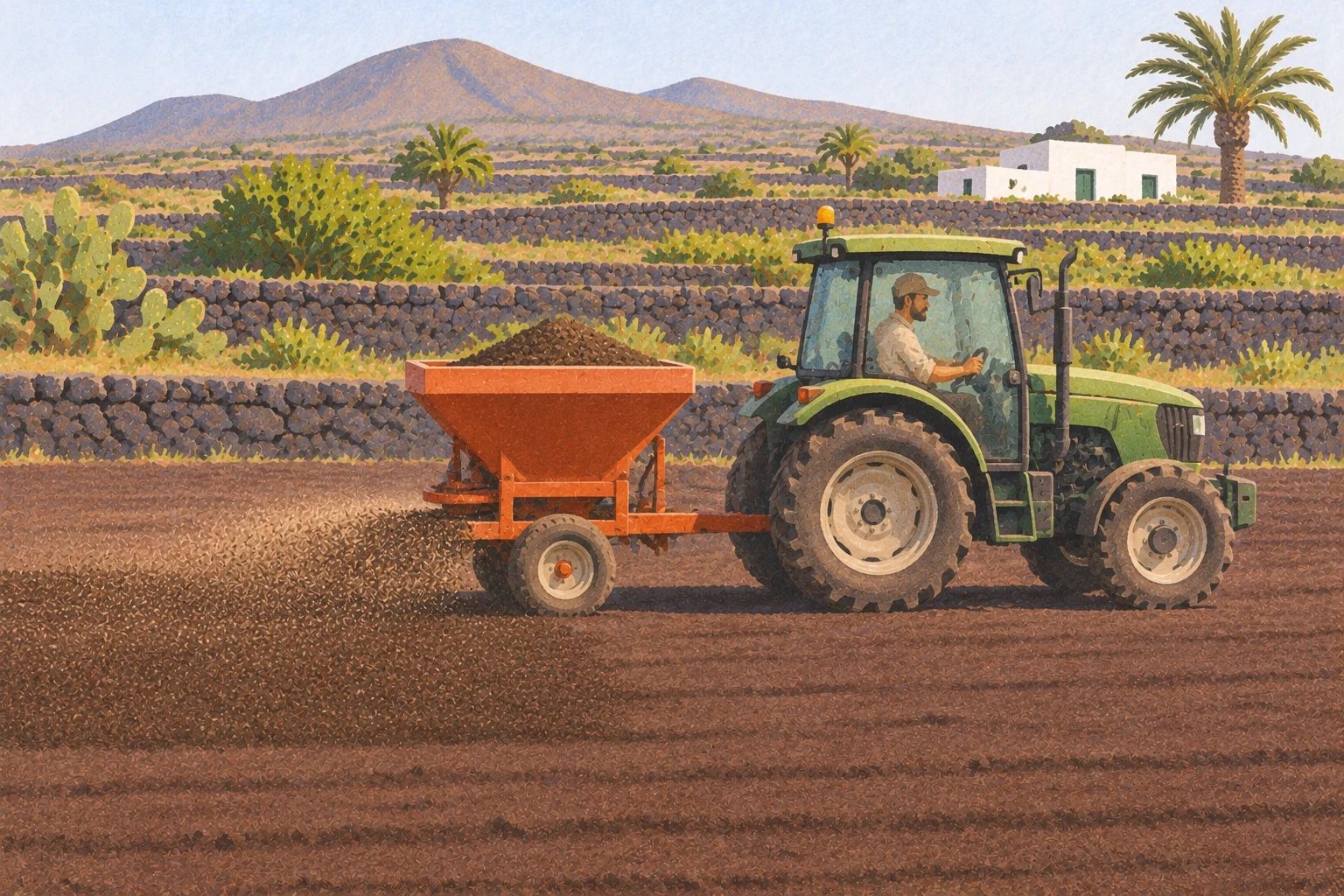
Illustration: a tractor and spreader lay a thin, even layer of manure over prepared soil.

Step 4 / 6

Spread it thin and even

A thin layer dries faster and mixes into the soil better. A lump is a fly nursery.

  • On prepared, unplanted ground: never on top of plants or the crop.
  • More than 5 metres from ravines and watercourses, and well away from wells, galleries and springs.
  • A thin, even layer, lumps broken up, in stretches you can work in straight away.
  • Early in the morning or towards evening: it is cooler, so there is less smell and less nitrogen lost.
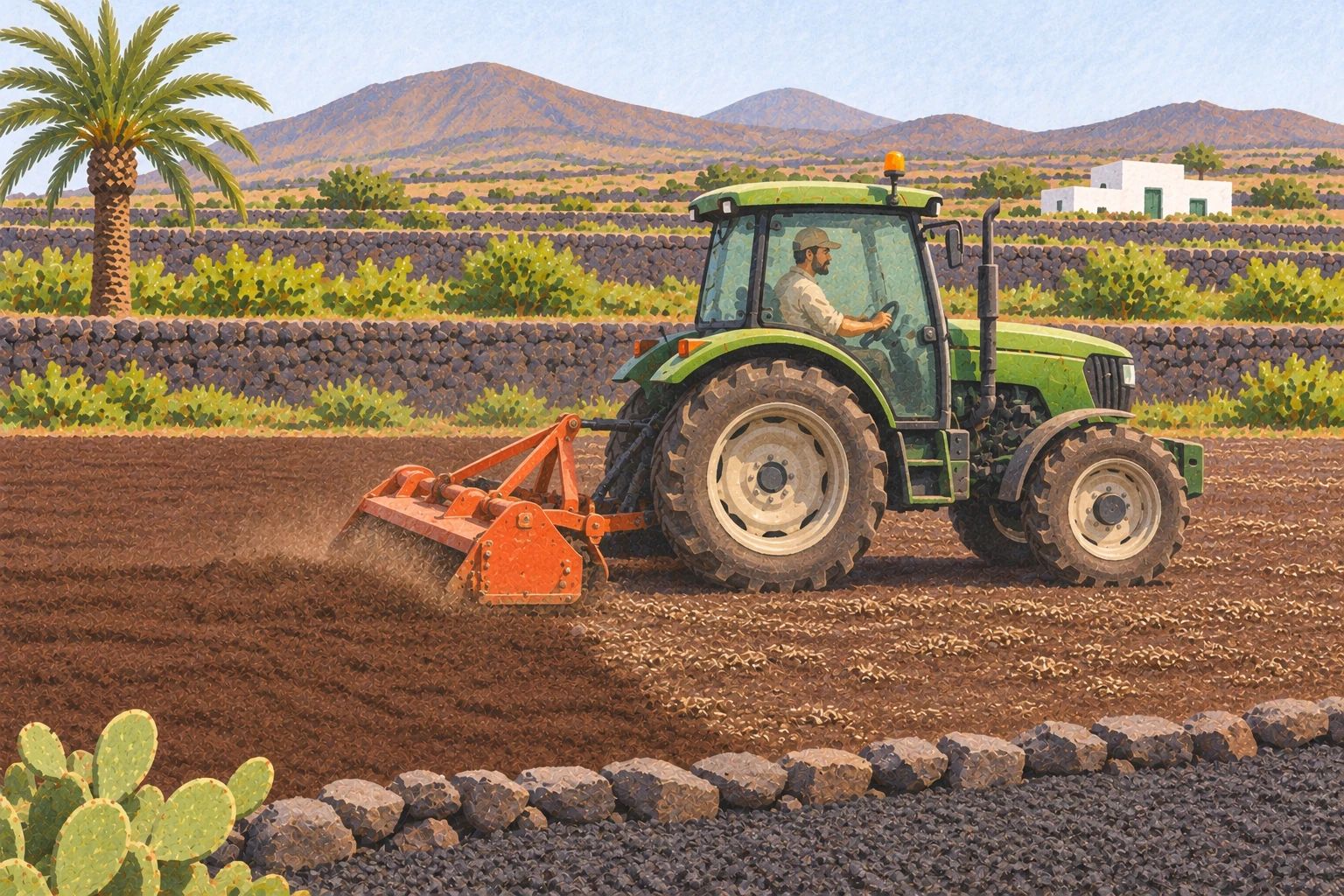
Illustration: a tractor with a rotavator works the manure in right behind where it was spread.

Step 5 / 6

Work it in straight away

This is the step that removes most smell and most flies.

  • Right behind: run the rotavator, cultivator, plough or hoe within the first few hours.
  • Always within 24 hours of spreading: the law requires it.
  • About 10–15 cm deep, well mixed into the soil.
  • On sand-mulched plots (picón or jable): move the sand aside, put the manure on the soil, mix it in and cover again.
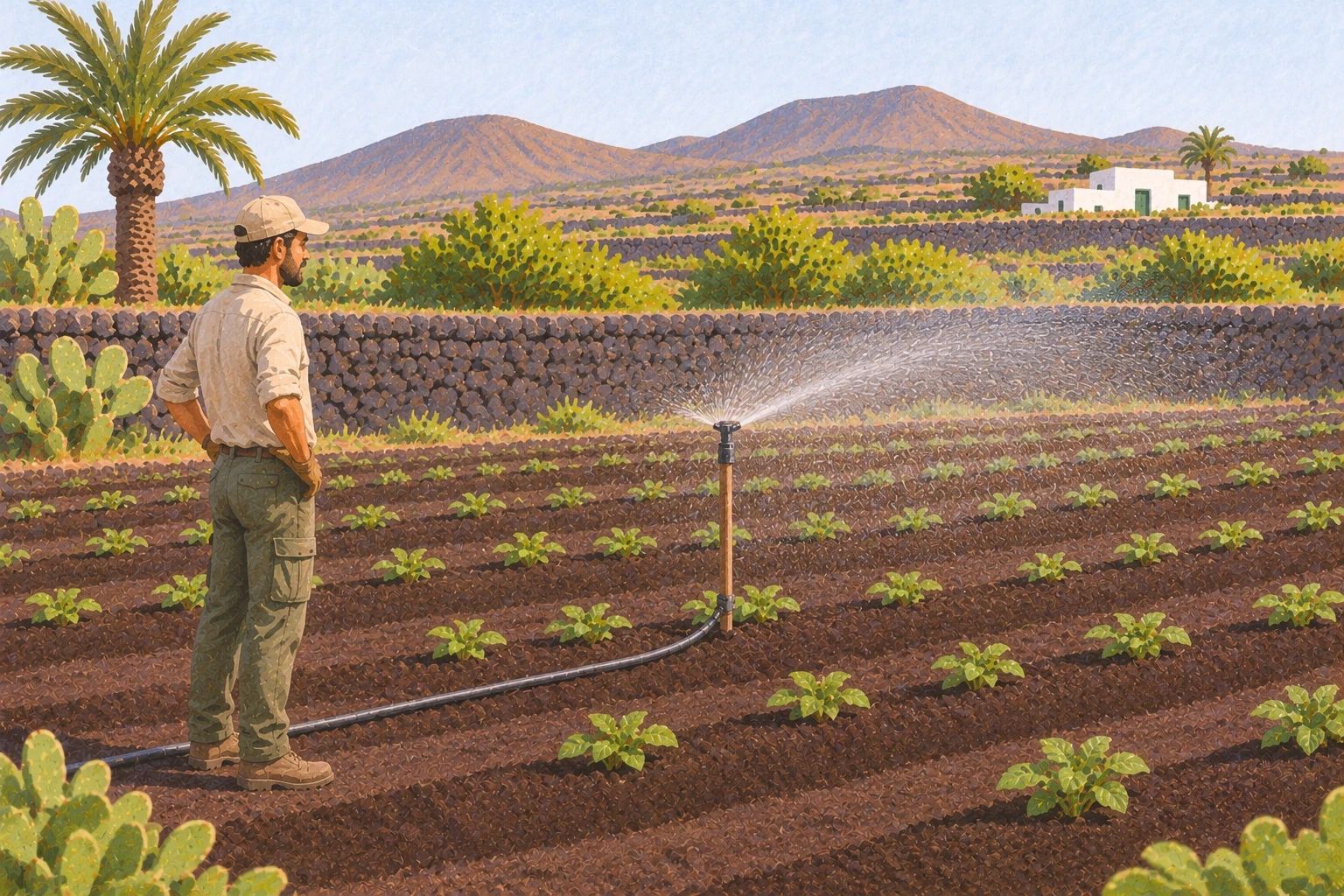
Illustration: weeks later, the first potato plants come up in rows while a sprinkler waters them gently.

Step 6 / 6

Wait before planting

Fresh poultry manure is strong: it needs a few weeks in the soil.

  • 3–4 weeks between working it in and planting or sowing: any sooner and it can burn seed and roots.
  • A light watering if the soil is dry, so it settles, without waterlogging.
  • For potatoes, only before planting: never when earthing up or onto the plants.
  • At least 2 months between application and harvest, by law.

The deadlines at a glance

From the day the lorry arrives to the day you harvest.

  1. Day 0

    The manure arrives

    Start spreading it the same day.

  2. 24 hours

    Worked in

    At the latest, from spreading. Better within the first few hours.

    By law

  3. 10 days

    Longest in a heap

    Only if it cannot be spread sooner, and always covered.

    By law

  4. 3–4 weeks

    Plant or sow

    Any sooner and it can burn the seed.

  5. 2 months

    Harvest

    At the earliest, from application.

    By law

How much to apply?

There is no single rate: it depends on the manure, your soil and what you grow. These figures are a guide for fresh laying-hen manure (around 1–1.5% nitrogen). Adjust them with the analysis and your adviser.

Potatoes

main and winter crops

Per m²
1–1.5 kg
Per hectare
10–15 t

A hungry crop. Add potassium if the analysis calls for it.

Cereals

wheat, barley, rye, maize

Per m²
0.5–1 kg
Per hectare
5–10 t

Do not overdo it: too much and they grow tall, fall over and fill grain poorly.

Legumes

broad beans, peas, lentils, chickpeas, beans

Per m²
0.3–0.5 kg
Per hectare
3–5 t

Little: they make their own nitrogen; the manure mainly gives them phosphorus and potassium.

Measuring without scales

  • One kilo per square metre is 10 tonnes per hectare.

  • A full wheelbarrow of fresh manure weighs about 50 kg. At 1 kg/m², it covers about 50 m².

In a nitrate vulnerable zone

Manures may add no more than 170 kg of nitrogen per hectare per year: with manure at 1.2% nitrogen, that is about 14 tonnes per hectare.

Why it works

Flies

Flies lay eggs in moist manure and, in 7–10 days (less in summer), hundreds hatch. If the manure is spread and worked in within a day or two, the cycle is broken before it starts.

Smell

The smell is mostly ammonia, escaping while the manure lies in the open. Buried, that ammonia stays in the soil as food for your crop.

Protect yourself

  • Gloves and an FFP2 mask when handling it, especially if it is dry and dusty.

  • Wash your hands before eating, drinking or smoking.

  • Clean wheels and tools before going back on the road.

Take it with you, pass it on

On paper for the tool shed, on your phone for the neighbours.

About this guide

The idea

Matías Cruz González

Partner at Granja La Cuesta

Granja La Cuesta is a family business in Gran Canaria that has been producing fresh eggs on its two laying-hen farms for more than 50 years.

granjalacuesta.com

Made by

We build and look after websites for local businesses. We made this guide from start to finish:

  • Text
  • Illustrations
  • Website
  • Printable PDF
we-site.ch